


There are some buildings that rise above the inanimate. They whisper stories, sing songs, and incite nostalgia. One such edifice stands tall in Hooghly, West Bengal – The Itachuna Rajbari. It was home to a family of landlords and gets its name from the brick lime facade that still adorns it. Some say Itachuna is haunted, others are mesmerized by its architecture reminiscent of a glorious Bengal. Some, like me, are just moved by the tales it hides in its giant rooms, tall ceilings, antique furniture, and sweeping verandahs. Let me tell you the story of the Itachuna Palace.
The violent past
The story of the Itachuna Palace takes us back to that period in Bengal’s history when she was periodically looted and plundered by the Maratha Bargis. At the time (mid-18th Century), Bengal was ruled by Nawab Alivardi Khan. The Maratha cavalries, known as Bargis, strode into a peaceful Bengal around 1742, looking for its rich land and taxes. The Mughal era had descended in India and the golden age of the Marathas had begun. Nawab Alivardi Khan fought heroically to save his kingdom the first time, but the consequences of the attacks were devastating. Bengal was then going through a period of Famine and the inability to pay taxes to the Bargis left people vulnerable. It is one of the biggest mass violence and destruction in the history of India.
The plundering and looting of Bengal continued for 10 years before the Nawab of Bengal made a peace treaty with the Marathas. However, these attacks left a lasting impression on the minds of the common people.


Bengalis have heard the popular lullaby:
“Khoka ghumolo para jurolo, Borgi elo deshe,
Bulbuli te dhaan kheyeche khajna debo kishe”.
It translates to:
“When the kids sleep, silence sets in the town,
But then the Bargis creep in.
The birds have eaten the grains, how can I pay taxes?”
This rhyme indicates how Bargis attacked at night and wreaked havoc. However, like every other war in history, this Maratha Invasion left a cultural mark in Bengal. The beautiful landscapes and nature’s bounty led many “Borgis” to settle here. They started their own trade, became wealthy, intermingled with the locals, and soon were considered ‘Bengali’. The Itachuna Rajbari boasts the wealth and abundance of a Borgi Landlord family of Bengal. That is why Itachuna Rajbari is also known as Bargee Danga.
How to reach Itachuna Rajbari
So when you look at the majestic and grand Itachuna Rajbari near Khanyan in West Bengal, you are witnessing hundreds of years of history. It carries with it the violent beginnings followed by peace, grandeur, and the interesting domestication of the Borgis.
As per the official website of Itachuna Rajbari, one of the Martha warrior families were Kundans now known as “Kundu”, a popular Bengali surname. The Rajbari was built by the ancestors of Shri Safallya Narayan Kundu in 1766.
A few years ago the house was dedicated to hospitality and renovated to suit tourist needs.
It’s a 3-4 hour drive from the cosmopolitan Kolkata to the greeneries of the historic building. The place is a 2-mile drive off the Grand Trunk Road (GT Road / SH13) on Polba-Khanyan Road towards the village of Pandua in the Chinsurah subdivision of Hooghly district. The nearest railroad head is Khanyan.
A virtual tour around the Itachuna Palace
The Rajbari is divided into five mahallas – a village Courthouse, a Ballet Dancing Hall, a Kitchen house, a Guest house and an Andar Mahal for ladies.
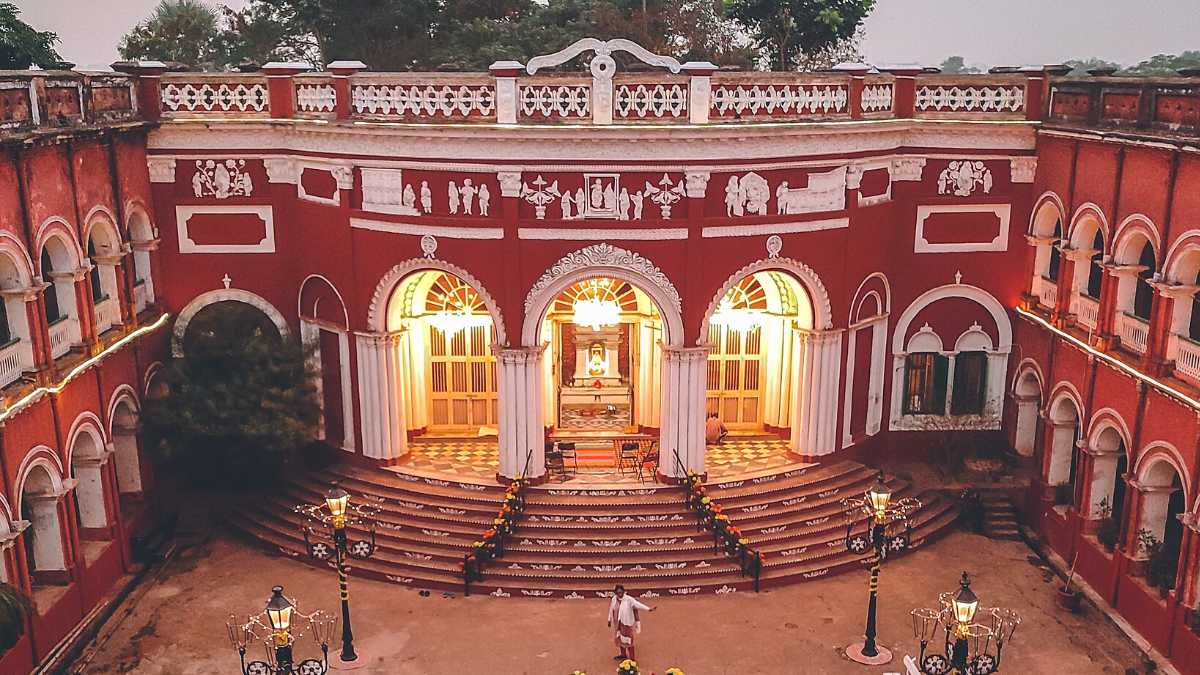
The rooms are artfully decorated with vintage furniture and yet modernized for ease of the guests. The rooms are named after typical Bengali joint family figure-heads. Anyone who has grown up with relatives would relate to these names instantly.
“Thakurmar Ghor” (Grandma’s room), or “Boro Boudir Ghor” (Elder sister in law’s room), these names throw you back to the ‘pre-nuclear family’ era in Bengal, where people grew up with the adulation of different special people in their lives beyond parents. Bengali literature by Saratchandra aptly brings out the beauty of such relations in many of his novels.

Royal in your Platter
Similar to the rooms and the decor the food is also “Sabeki” (classic). The hosts offer meals, both vegetarian and non-vegetarian, in royal bell metal cutlery. Just the presentation of the food is sufficient to make you want to drive over.
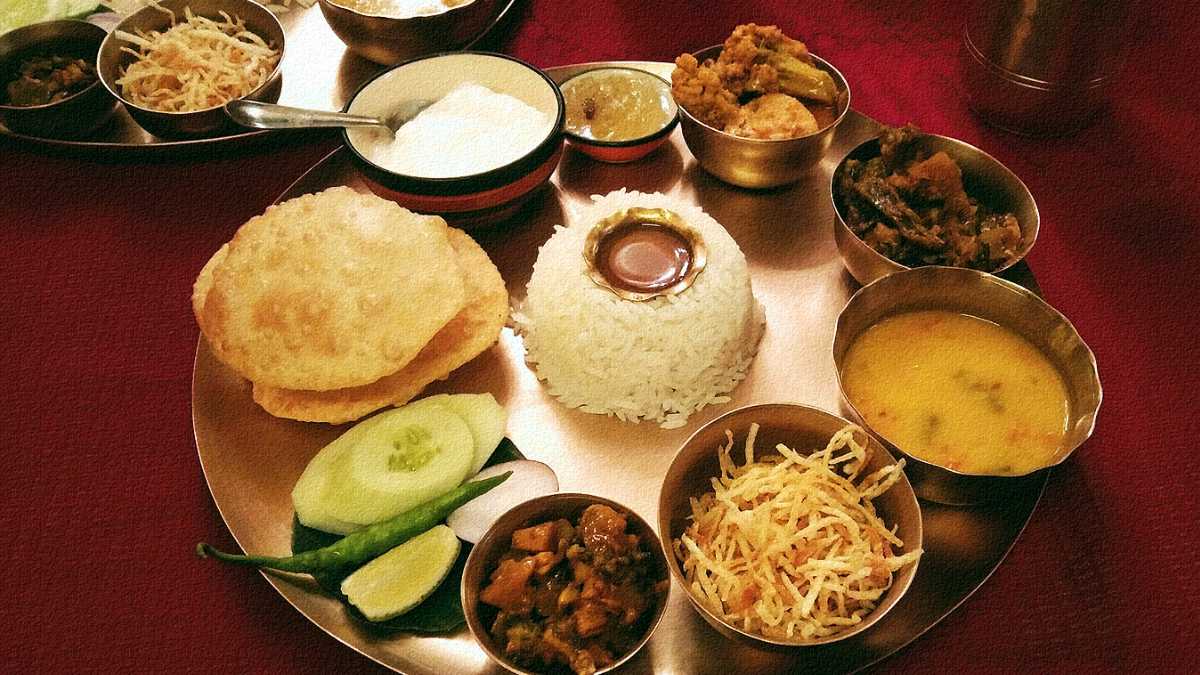
The menu ranges from the quintessential Bengali ‘Sukto’ to ‘Beguni’, ‘Luchi Tarkari’ to ‘Alu Posto’, ‘Maccher Kalia’, ‘Kosha Mangsho’, ‘Polao’, and ‘Rajbhog’ – just to name a few items of the platter.
Fun facts!
- Popular Bollywood film Lootera was shot here thereby increasing the popularity of the place!
- It is supposed to be haunted and there are instances when sounds of dancers (women! ) wearing anklets are heard.
If you are in Kolkata or visiting Kolkata, experiencing this Rajbari is a must! From hundreds of years of history to witnessing the lush farmlands of rural Bengal, and the delectable platter, you will surely feel like a royal, most importantly without burning a gaping hole in your pocket!