Daydreaming is either my superpower or my manufacturing defect. Either way, it doesn’t look too good on my resume. It does, however, serve me the purpose of escaping. Life, no matter how beautiful, demands an escape from reality once in a while. It often translates to our need to go away – get a change of scenery, climate, and coordinates. As I flipped shut Kurt Vonnegut’s Slaughterhouse Five, of all things, my mind wandered to the possibility of travelling along the time coordination. What if we could also, as Vonnegut imagined in his famous novel, ‘come unhinged in time’? My pursuit of the Time Machine seemed to be presenting a few more hurdles than I had anticipated, so I wracked my brain for alternatives. This is what I came up with. The next best thing would be to enjoy a slice of the Royal Past of India in an anachronous adventure.
Holi, the Festival of Colors, is one of the largest festivals across India. While the different regions have varied adaptations and myths associated with the festival, it is agreed that the name Holi was given after the Demoness Holika, whose attempt to kill Prahlad, was foiled on this Phalguni Purnima (full moon night) many centuries ago. The Bhagavat Puran celebrates the victory of good over evil through her story. India commemorates Vishnu’s triumph with an annual bonfire, Holika Dahan, on the night before Holi each year.
History is written by the Victors
A large part of Vedic and Puranic literature is composed in glorification of the different avatars of Vishnu. Over centuries, the stories have seeped into folklore. To a certain extent, they have gotten simplified to make the morals stand out – in black and white, good vs. evil.



But, as life teaches us, no political discord is as simple, as black and white, in its discourse.
The Demons (or Asuras), depicted in Hinduism, have some traits in common. They were darker, with bigger built, and less conforming to conventional standards of beauty. It is possible that they were indigenous to the land and more coarse in their lifestyle than the fair-skinned Gods (or Suras), led by their heroes, Vishnu, Brahma and Shiva (less prominent in the above-mentioned literature). But, it is clear that the Suras won the conflict, and went on to occupy the land.
The history of Hinduism has been authored under the able patronage of the victor Devas. It is possible that their accounts have exaggerated the evil of their foe.
There is, in fact, a little town in Bundlekhand, Erich Town, that doesn’t celebrate Holi to this date. It is customary there, to stay indoors and wear black, in remembrance of their Princess Holika, who was burnt alive on this occasion.
Let us talk about Holika
Holika’s story is connected to Vishnu’s Narasimha avatar. According to the Puranas, Holika’s brother, the mighty King Hiranyakshipu, wanted to be immortal, like the Devas. He had tricked the Lords into giving him a boon, that laid many conditions, to inhibit his mortality. This gave him the misplaced confidence of being the Lord himself. He asked his son, Prahlad, to worship him instead of Vishnu. Prahalad disagreed to sway his allegiance from the Deva. This led the King to such a rage that he wanted to kill his son. It was at this time that he asked his sister, Holika, to enter a pyre with Prahlad in her lap. Holika had a magic cloth that could protect her from burning in a fire. She entered the pyre with the child and the cloth. But, she burnt alive while the child survived.
Some folktales mention that Holika, in fact, knowingly sacrificed her own life to save the child.
Even if that is not true, it seems far-fetched to imagine the King, who was ready to kill his own son, gave a choice to Holika. It seems way more likely that she was compelled to follow the King’s orders at any cost.
From that lens, Holika was more likely a victim of royal crossfires, rather than an embodiment of evil.
Into the Jaws of Death
It is sometimes important to question the wisdom of the folklore. In my head, Holika Dahan signifies the helplessness of the affected, in the face of belligerence and power struggle. I wish someday we are able to see how Holikas are burning every day as wars still ravage our worlds.
So, I came up with this cheat sheet to 5 most incredible palace hotels in India within budget to live like Royalty, which, believe it or not, would not burn a Royal hole in your pocket:1. Shivavilas Palace Hotel, Sandur, Karnataka
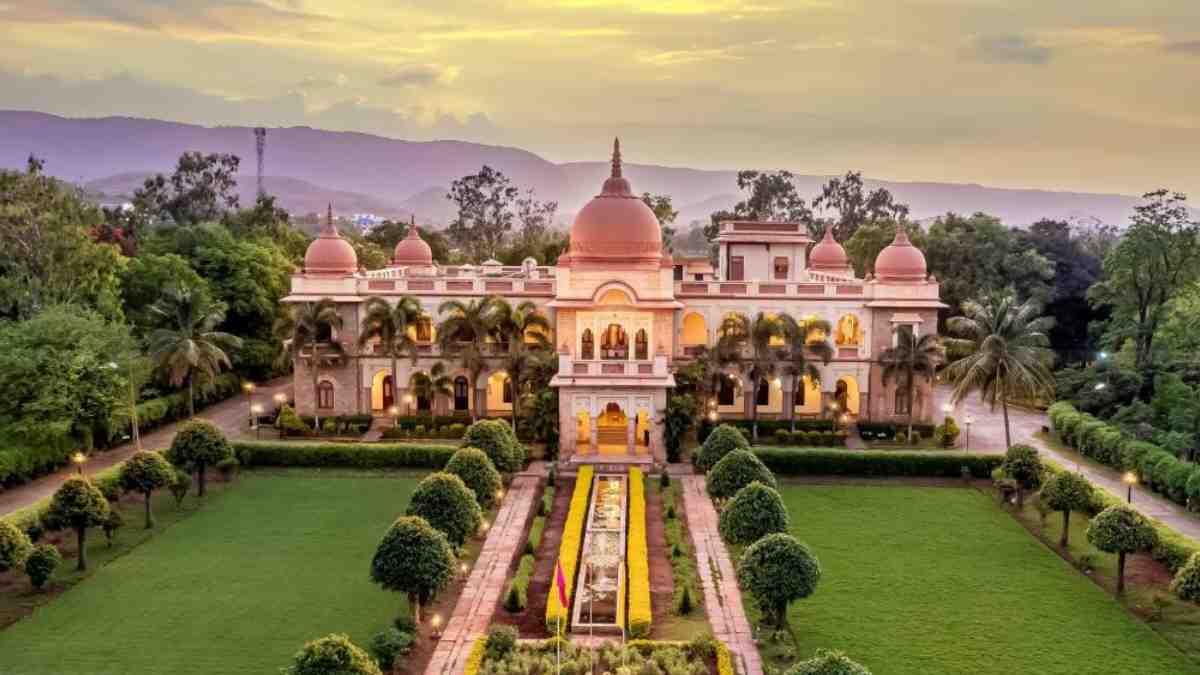
This beautiful Shivavilas Palace Hotel, managed by the WelcomHeritage group is about 350 km away from Bengaluru City and a mere 40 km from the UNESCO World Heritage site, Hampi. The palace dates back to the early twentieth century and belongs to the Ghorpade family, who are Ore and Mining giants in the region. The Palace was turned into a hotel just a few years back and is fresh from the mint for those seeking the luxury of large rooms and royal furniture at nominal rates.
2. Itachuna Rajbari, Hooghly, West Bengal
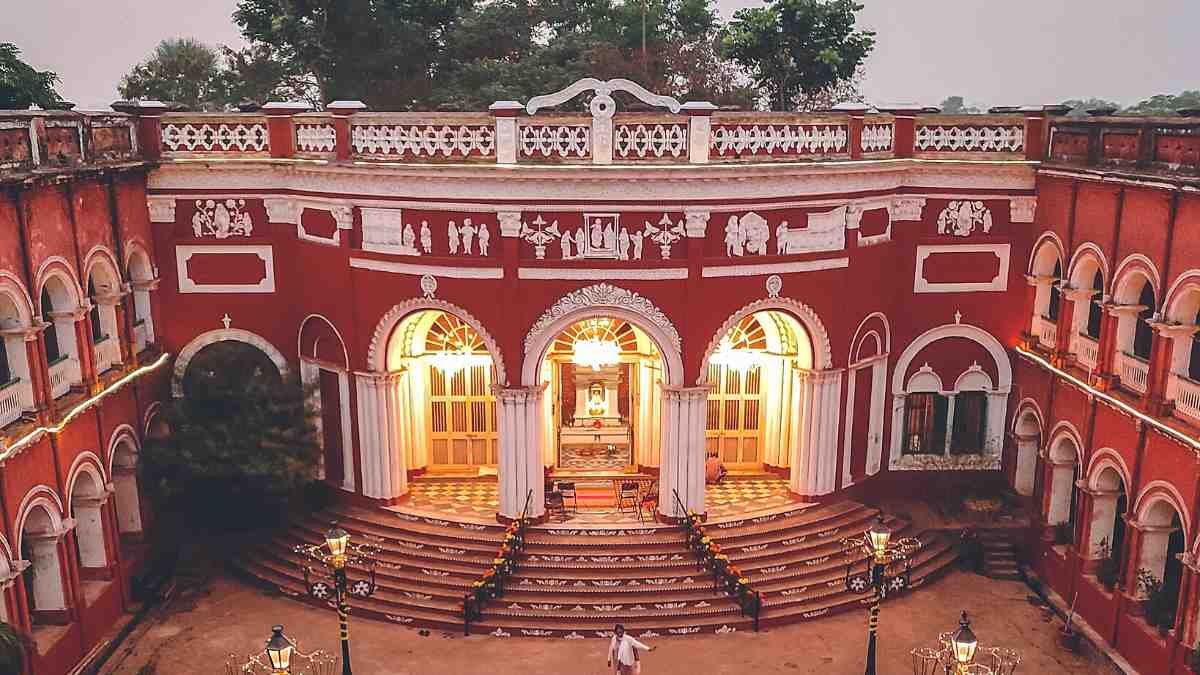
This palace belonged to the Borgis, the Maratha warlords who invaded and settled in Bengal, eventually becoming sons of the soil. The family that owns the palace have varied businesses in Kolkata. The rooms are cleverly named after their original occupants (eg: Thakumar Ghor/Grandmother’s) and have retained all the erstwhile furniture. The quintessential Bengali Raj Bhog (the King’s meal) is served in royal crockery. The popular Bollywood movie, Lootera, was shot at Itachuna Rajbari.
Also Check: Haunting story of the Itachuna Palace
3. Amar Mahal, Orchha, Madhya Pradesh
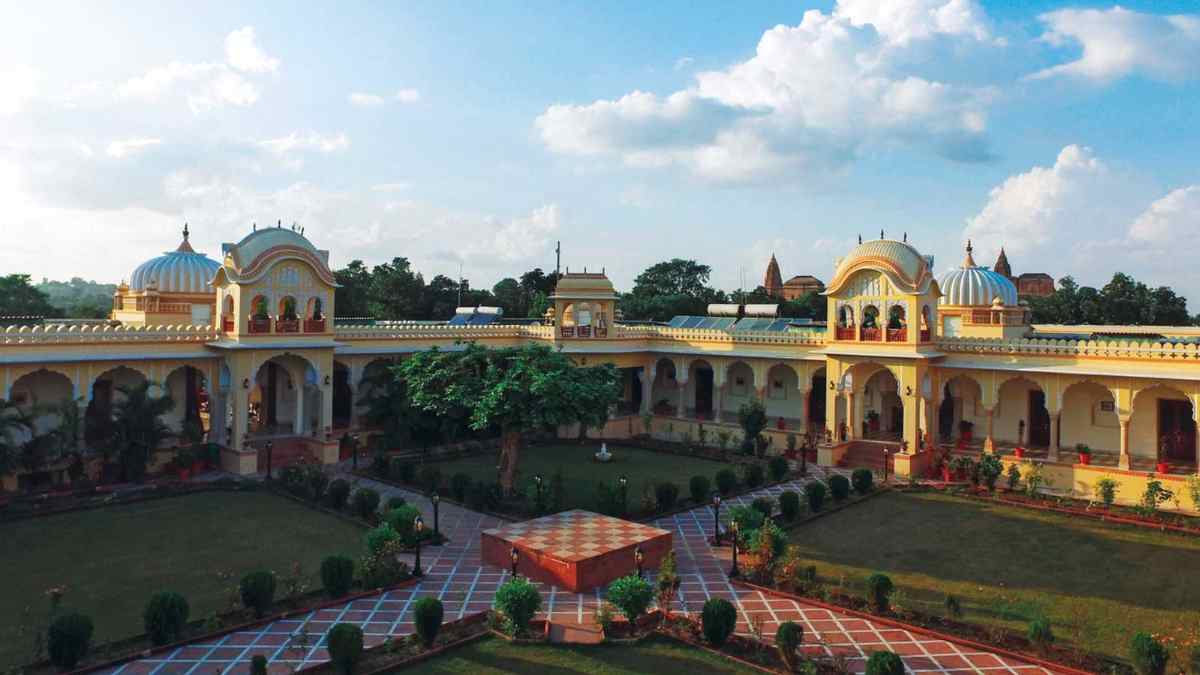
Amar Mahal was built in the late 19th century in the architecture reminiscent of the Rajput house of Bundelkhand. The palace hosts exquisite Bundela paintings, metal artefacts from local Dokra artists and other items of splendour dating back to that era. The Bundelkhandi Dining is a treat for the senses, made with organic produce from their in-house garden. The palace overlooks the River Betwa, the scenery is likely to take your breath away.
4. Kasmanda Palace Hotel, Mussoorie, Uttarakhand
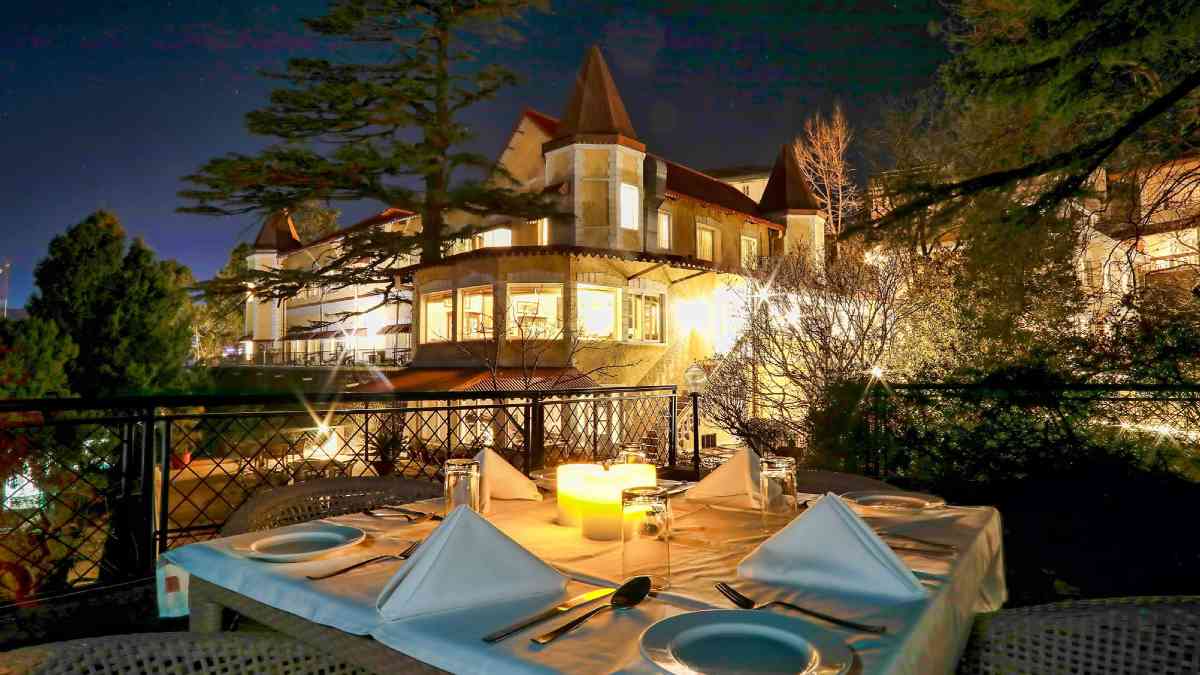
Originally a part of the Christ Church complex built in 1836, this Heritage Hotel, managed by the WelcomHeritage group is slightly different in taste and architecture from the rest on the list. The Anglo-French building was built for the British Armed Forces before becoming the Summer retreat of the Kasmanda Royal Family. The soothing pine forests surrounding the estate and the breathtaking view of the Doon Valley make it one of the most picturesque places to board. Kasmanda Palace Hotel offers you the chance to soak in colonial elegance while enjoying all modern amenities.
5. Neemrana Fort Palace, Alwar, Rajasthan
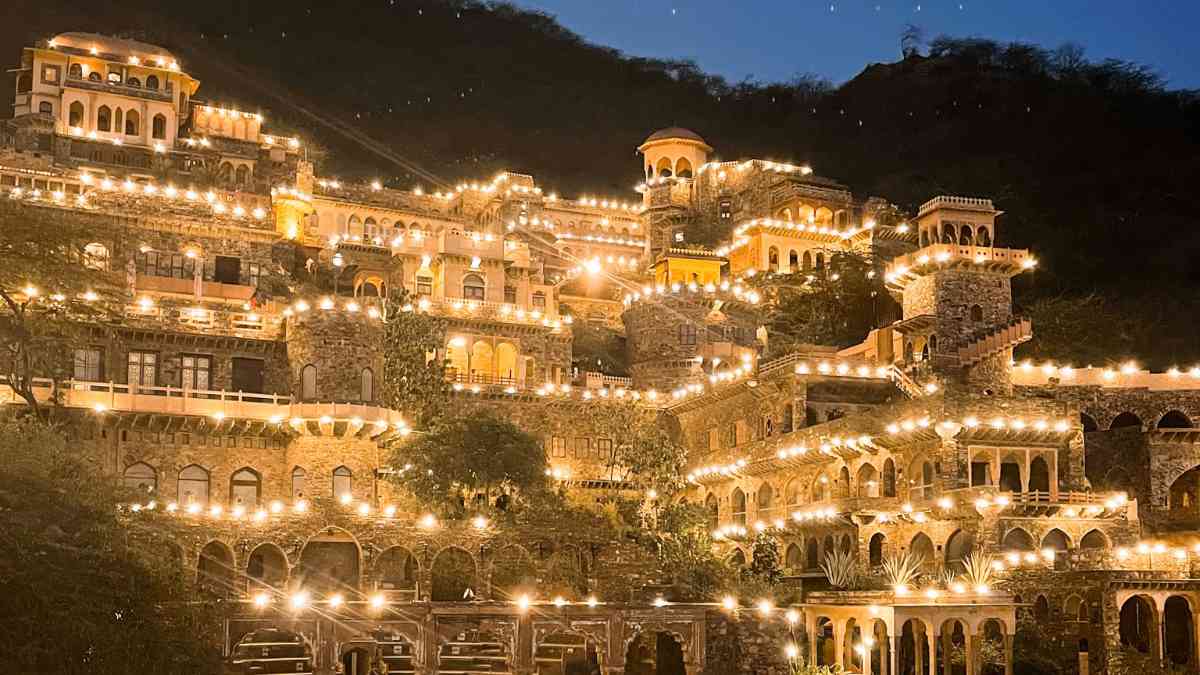
How can we traverse palaces without mentioning Rajasthan? The Neemrana group has restored many beautiful forts and palaces across the country. But this one definitely takes the cake. This grand fort was first built in 1464AD and was the capital for the descendants of Prithviraj Chauhan III. The erstwhile owners stood their ground against the British, resulting in the quick and steady depletion of their lands and power. In 1947, Raja Rajinder Singh finally moved out, leaving a decrepit fort behind. Neemrana Hotels restored the site and opened the resort in 1986, making Neemrana Fort Palace one of the earliest heritage resorts in India.