Perceptyne, a deep-tech deep-tech robotics and AI company has raised $3 million in seed funding round led by Endiya Partners and Yali Capital with participation from Whiteboard Capital and notable angels.
The funds raised will be used to accelerate expansion, client acquisition, and product development.
Raviteja Chivukula, CEO & Co-founder, Perceptyne, said, “AI has been making huge strides in the digital world with more computing being available, complex models being built, and large amounts of data being collected. Leveraging these advances in the world of manufacturing automation requires a different class of robots—those that can sense the real world better and are articulate enough to execute AI inferencing granularly. Perceptyne is building automation systems at this intersection—those that combine AI models with dexterity, multi-modal sensing, and articulate actuators. We believe that this will revolutionize manufacturing by making many more applications automatable.”



Raghav Gupta, Vice President, Endiya Partners, commented, “The time has come for an AI-first robotics company that is building for manufacturing automation. Perceptyne is addressing the critical need for a drop-in, generic automation solution that learns through AI-led teleoperation. Considering the tailwinds behind Make in India and the Perceptyne team’s capability, we believe there is much to be excited about.”
“We are excited about the potential of Perceptyne’s unique multi-faceted technology to deliver robotic solutions that are precisely tuned to the needs of sunrise sectors of India’s growing economy, such as electronic manufacturing. We are very happy to partner with the talented and innovative team at Perceptyne, and we believe that they are well equipped to address the opportunities available at the intersection of robotics and AI,” added Karthik Madathil, Partner at Yali Capital.
Founded by Raviteja Chivukula, Jagga Raju Nadimpalli, and Mrutyunjaya Nadiminti, Perceptyne specializes in developing AI-powered robotics platforms designed for tasks that demand human-like precision, such as product assembly and packaging.
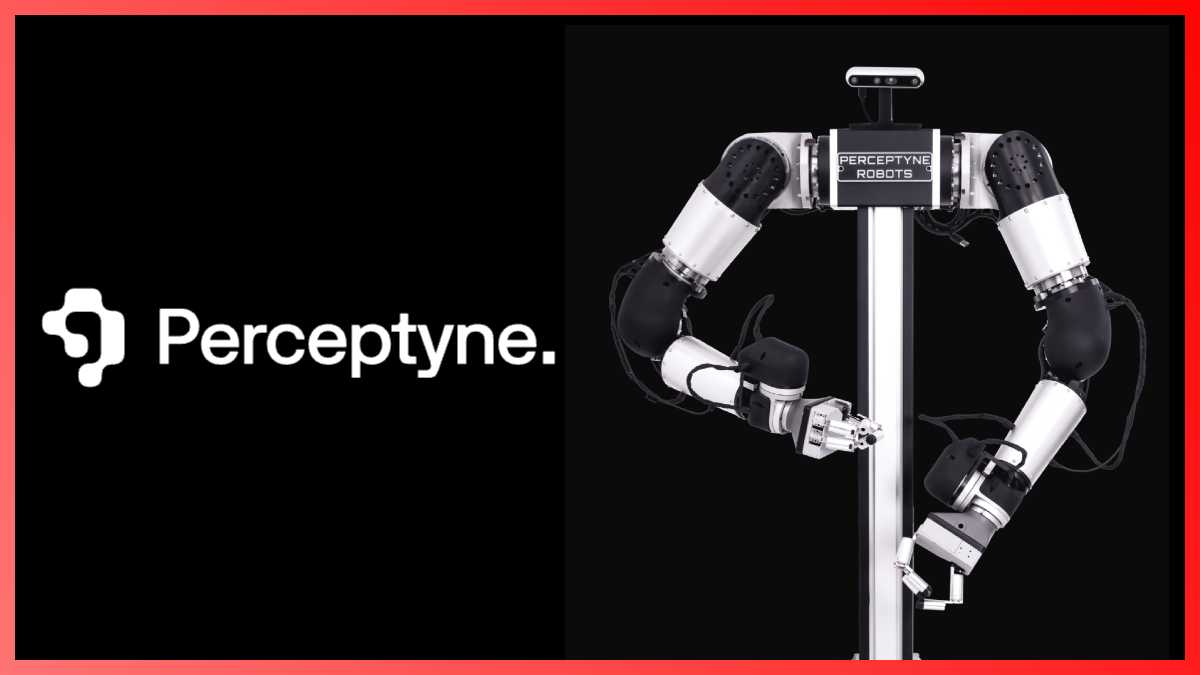
Their flagship products, the PR-34D and PR-9D robots, incorporate advanced computer vision, AI capabilities, multi-modal sensing, and highly articulate end-effectors, making them ideal for manufacturing and assembly lines.
Perceptyne’s business model is twofold, offering both a capex option for companies to purchase the robots outright and an opex model where Perceptyne installs the robots and generates revenue based on usage. The company currently collaborates with major players in the automotive and electronics industries.